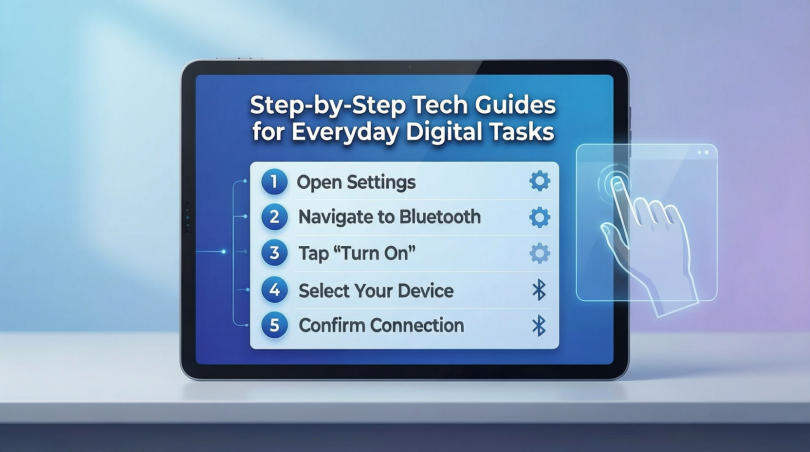

Technology is part of daily life now. We use it to study, work, communicate, and manage personal tasks. Still, many people feel confused when using new apps, devices, or software. This is where step-by-step tech guides become extremely useful. They break complex actions into simple instructions that anyone can follow.
Step-by-step tech guides help beginners feel confident while also supporting intermediate users who want to improve their skills. Instead of guessing or feeling stressed, users can move forward with clarity. Each step explains what to do and why it matters. This makes learning smoother and less intimidating.
Another reason step-by-step tech guides are important is their practical nature. They focus on real tasks such as setting up a phone, installing software, fixing common problems, or improving online safety. Readers do not need a technical background to understand these guides. Simple language and clear structure make all the difference.
In today’s fast-moving digital world, learning by trial and error can waste time. Clear guidance saves effort and reduces mistakes. Step-by-step tech guides also encourage independent learning. Once people follow a few guides successfully, they gain the confidence to explore more tools on their own.
This article explains what step-by-step tech guides are, why they matter, and how to use them effectively. You will also learn about benefits, risks, common mistakes, and expert tips. Whether you are just starting or already familiar with basic technology, this guide will support your digital journey in a practical and friendly way.
What Are Step-by-Step Tech Guides?
Step-by-step tech guides are written instructions that explain how to complete a technical task in clear stages. Each step builds on the previous one, helping the reader move forward without confusion. These guides focus on clarity, order, and simplicity.
Unlike long technical manuals, step-by-step tech guides avoid complex terms. They explain actions in everyday language. For example, instead of saying “configure system preferences,” a guide may say “open settings and choose your options.”
These guides can cover many topics. Common examples include setting up email accounts, using mobile apps, fixing slow devices, managing files, or improving security. The goal is always the same: make technology easier to understand and use.
Another key feature of step-by-step tech guides is structure. They often use headings, numbered lists, and short paragraphs. This makes the content easy to scan and follow. Readers can quickly find the exact step they need.
Most importantly, step-by-step tech guides are user-focused. They are written from the learner’s point of view. The guide assumes the reader may be new, cautious, or unsure. Because of this, instructions are patient, detailed, and supportive.
Why Are Step-by-Step Tech Guides Important?
Technology can feel overwhelming, especially for beginners. Step-by-step tech guides remove that fear by offering clear direction. They turn complex tasks into manageable actions.
One major reason these guides are important is accessibility. Not everyone has access to technical training or expert support. A well-written guide can act like a personal helper, available anytime.
Step-by-step tech guides also reduce errors. When people guess what to do, they may click the wrong option or delete important data. Clear steps lower the risk of mistakes and save time.
Another benefit is confidence-building. Completing a task successfully encourages users to try more advanced features. Over time, this builds digital independence.
For intermediate users, step-by-step tech guides offer structured learning. They help refine skills and introduce better practices. Instead of random learning, users progress logically.
In workplaces and educational settings, these guides improve productivity. Employees and students can solve basic issues without waiting for help. This creates smoother workflows and less frustration.
Overall, step-by-step tech guides support learning, safety, and efficiency in a digital world that keeps changing.
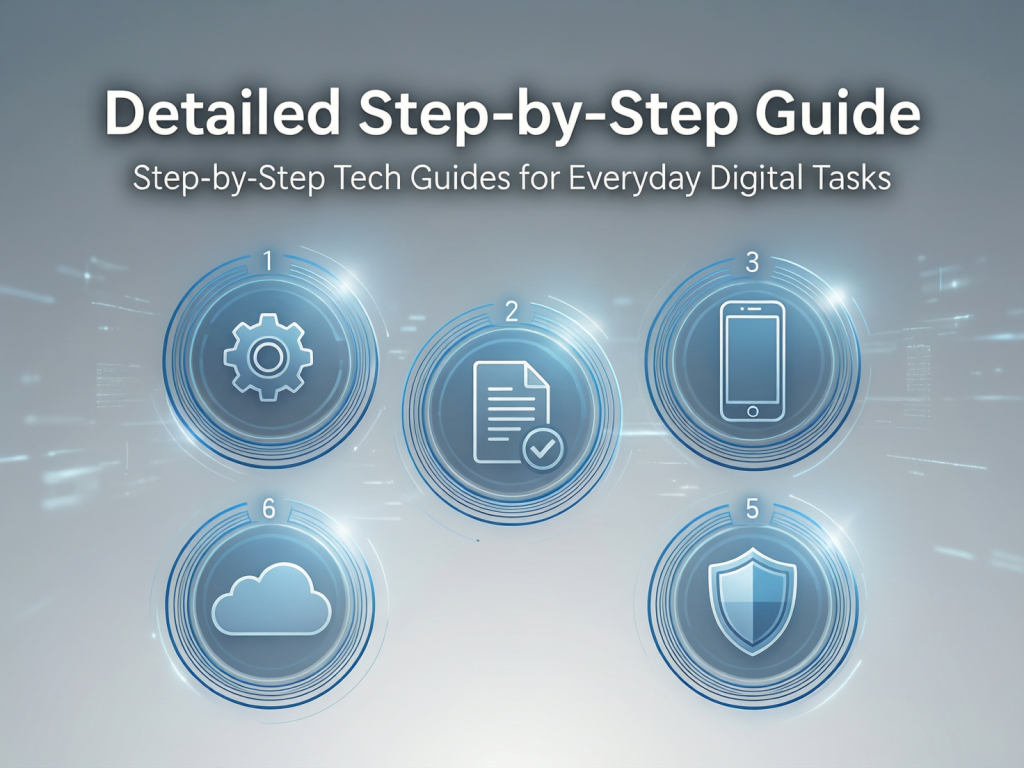
Detailed Step-by-Step Guide
Step 1: Identify the Task Clearly
Before following any guide, know exactly what you want to do. A clear goal helps you choose the right instructions.
For example:
- Setting up a new smartphone
- Installing a specific app
- Fixing slow internet
Being specific avoids confusion and saves time.
Step 2: Check Requirements
Most step-by-step tech guides mention basic requirements. These may include:
- A stable internet connection
- Login details
- Updated software
- Enough storage space
Checking these early prevents problems later.
Step 3: Follow Each Step in Order
Always follow the steps in the given sequence. Skipping steps may cause errors.
Read each instruction carefully before acting. Take your time and do not rush. Step-by-step tech guides are designed to work best when followed patiently.
Step 4: Understand What You Are Doing
Good step-by-step tech guides explain why a step is important. This helps learning.
For example, enabling security settings protects your data. Understanding this makes the step meaningful, not just mechanical.
Step 5: Use Visual Cues if Available
Some guides include screenshots or descriptions of buttons and menus. Match what you see on your screen with the guide’s explanation.
If something looks different, pause and recheck earlier steps.
Step 6: Save Progress Regularly
When working on tasks like writing, editing, or settings changes, save your progress often. This prevents data loss if something goes wrong.
Step 7: Test the Result
After completing all steps, test the outcome. For example:
- Send a test email
- Restart the device
- Open the installed app
Testing confirms success and builds confidence.
Step 8: Troubleshoot if Needed
If the result is not as expected, review the steps again. Many step-by-step tech guides include common fixes. Small errors are normal, especially for beginners.
Benefits of Step-by-Step Tech Guides
- Easy to understand for beginners
- Reduces fear and confusion
- Saves time and effort
- Improves accuracy and safety
- Encourages independent learning
- Builds long-term digital confidence
- Useful for self-study and training
- Helps avoid common mistakes
Disadvantages and Risks
- May become outdated if technology changes
- Some guides oversimplify complex tasks
- Not all guides suit every device or version
- Overdependence can limit problem-solving skills
- Poorly written guides may cause confusion
Common Mistakes to Avoid
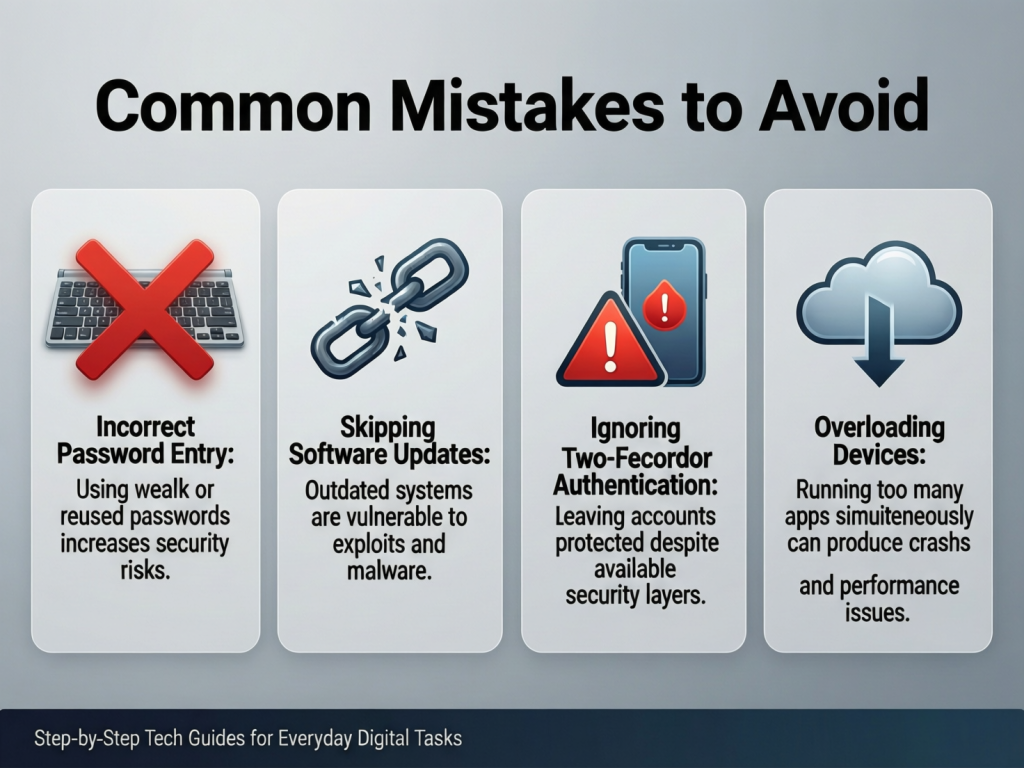
One common mistake is skipping steps. Even if a step looks simple, it may be important.
Another mistake is following outdated step-by-step tech guides. Always check the date or version mentioned.
Some users rush through instructions without reading fully. This often leads to errors.
Ignoring warnings is another issue. If a guide highlights a risk, take it seriously.
Finally, users sometimes apply the same steps to different devices without checking compatibility. Always confirm that the guide matches your system.
FAQs
What makes step-by-step tech guides beginner-friendly?
They use simple language, short steps, and clear explanations. They assume no prior technical knowledge and explain each action carefully.
Can intermediate users benefit from step-by-step tech guides?
Yes. Intermediate users can refine skills, learn better methods, and avoid bad habits through structured guidance.
Are step-by-step tech guides better than video tutorials?
Both are useful. Written guides allow easy rechecking and slow reading, while videos help visual learners. Many prefer written steps for accuracy.
How do I know if a tech guide is reliable?
Check clarity, structure, and logic. Reliable step-by-step tech guides explain reasons, not just actions.
Can I use the same guide for different devices?
Only if the guide clearly states compatibility. Otherwise, settings and options may differ.
How often should I update my learning?
Technology changes often. Revisiting updated step-by-step tech guides every few months is helpful.
Expert Tips and Bonus Points
Always read the full guide once before starting. This gives you an overview of the process.
Keep notes of steps you find difficult. This helps future learning.
Practice regularly. Repeating tasks improves memory and confidence.
Use step-by-step tech guides as learning tools, not just quick fixes. Try to understand the logic behind actions.
If something fails, stay calm. Technology issues are common and solvable.
Conclusion
Step-by-step tech guides play an essential role in making technology accessible and less stressful. They turn confusing digital tasks into clear, manageable actions that anyone can follow. For beginners, these guides offer a safe starting point. For intermediate users, they provide structure and improvement.
The strength of step-by-step tech guides lies in their clarity and order. By focusing on one action at a time, users avoid feeling overwhelmed. This builds confidence and encourages independent problem-solving.
While no guide is perfect, choosing well-written and updated instructions reduces risks. Being patient, careful, and curious improves results. Technology should support daily life, not complicate it.
As digital tools continue to evolve, the need for clear guidance will only grow. Learning how to use step-by-step tech guides effectively is a skill in itself. It empowers users to adapt, learn, and stay confident in a changing digital world.
By following structured steps, understanding the purpose behind actions, and avoiding common mistakes, anyone can improve their tech skills. Step-by-step tech guides are not just instructions. They are pathways to confidence, independence, and smarter digital living.