
Introduction
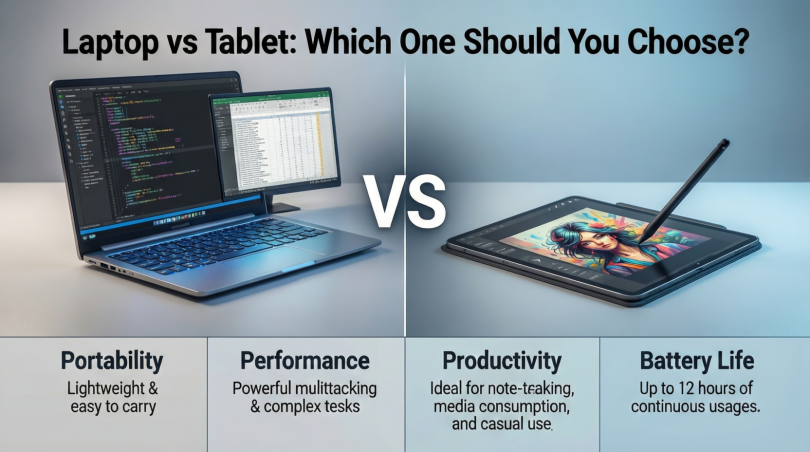
Choosing the right device in today’s tech world can be challenging. Whether for work, study, or entertainment, most people struggle to decide between a laptop and a tablet. Both devices are popular, portable, and designed to make life easier, but they serve different purposes. Understanding the differences, advantages, and limitations of each can save you time, money, and frustration.
A laptop is traditionally seen as a more powerful device suitable for multitasking, content creation, and running complex software. Tablets, on the other hand, are lightweight, portable, and ideal for casual use, reading, or quick internet access. Your decision should depend on your lifestyle, work needs, and personal preferences.
In this article, we will break down the Laptop vs Tablet comparison in simple terms. By the end, you’ll know exactly which device is better for your specific needs. This guide covers everything from technical specifications and performance to benefits, disadvantages, and practical tips.
Whether you are a student, professional, or casual user, understanding these differences will help you make an informed choice. Let’s dive into the world of laptops and tablets and see which one comes out on top.
What is Laptop vs Tablet?
A laptop is a portable personal computer designed for productivity. It includes a built-in keyboard, larger screen, and operating system that supports a wide range of software. Laptops can handle tasks like video editing, gaming, programming, and professional work. They offer powerful processors, more storage, and a variety of connectivity options.
A tablet is a handheld device with a touchscreen interface. Tablets are lighter, more portable, and designed for casual tasks like browsing the web, watching videos, reading, and light productivity. While modern tablets have become more powerful, they generally cannot match the processing power of laptops.
The primary keyword, Laptop vs Tablet comparison, is crucial when evaluating which device fits your lifestyle. Understanding each device’s core purpose helps you make the right choice without overspending.
Why is Laptop vs Tablet Important?
Deciding between a laptop and a tablet is more than just choosing a gadget; it affects your efficiency, productivity, and overall digital experience. Here’s why it’s important:
- Performance Needs: Laptops handle demanding tasks better, while tablets excel at portability and convenience.
- Cost Efficiency: Knowing which device fits your needs prevents unnecessary spending.
- Portability: Tablets are easier to carry around, but laptops offer better work performance on the go.
- Future-Proofing: Laptops are generally more upgradable and last longer in terms of performance.
- User Experience: Understanding each device ensures comfort and reduces frustration in daily use.
A careful Laptop vs Tablet comparison ensures you invest in a device that complements your lifestyle, work habits, and personal preferences.
Detailed Step-by-Step Guide
1. Performance Comparison
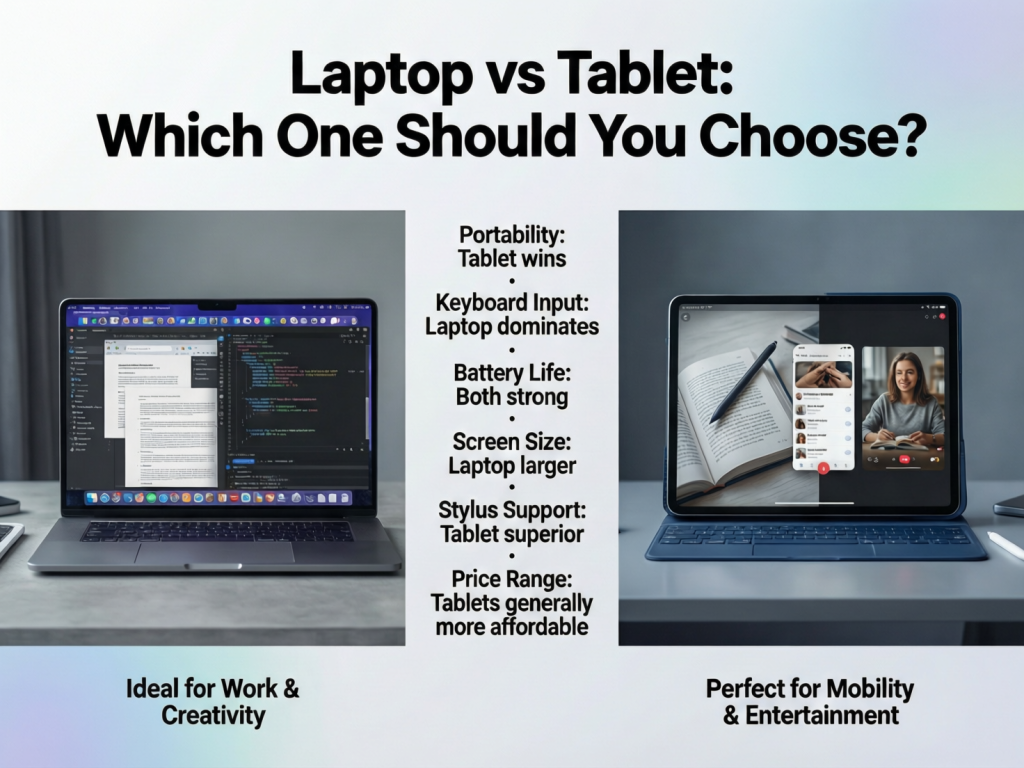
- Laptop: Powerful processors, more RAM, larger storage. Handles multitasking and heavy software like Photoshop, Excel, and games.
- Tablet: Lightweight processors, limited RAM. Suitable for browsing, media consumption, and light apps.
2. Portability and Design
- Laptop: Heavier, larger screen, needs a flat surface. Some ultrabooks are lightweight but still bulkier than tablets.
- Tablet: Thin, compact, and easy to carry anywhere. Ideal for travel and casual use.
3. Battery Life
- Laptop: Average 5–10 hours depending on usage. Heavy tasks drain battery faster.
- Tablet: Typically 8–12 hours or more, ideal for reading, streaming, or light work without frequent charging.
4. Input Methods
- Laptop: Full keyboard, trackpad, sometimes touchscreen. Easier for typing and productivity.
- Tablet: Touchscreen input. Optional keyboard accessories available but smaller and less efficient for long typing sessions.
5. Software and Apps
- Laptop: Runs full desktop OS (Windows, macOS, Linux). Access to professional software.
- Tablet: Runs mobile OS (iOS, Android). App-focused ecosystem, limited desktop-class software.
6. Connectivity Options
- Laptop: Multiple ports (USB, HDMI, SD card). Easier to connect peripherals like printers, external drives.
- Tablet: Limited ports, often requires adapters for external devices. Better wireless connectivity.
7. Multimedia Experience
- Laptop: Larger screen, better audio, great for video editing, gaming, and productivity.
- Tablet: Ideal for reading, watching videos, and casual gaming. Lightweight for one-hand use.
Benefits of Laptop vs Tablet
- Laptop Benefits:
- High performance for multitasking
- Full software support
- Better storage and RAM
- Ideal for professional work and gaming
- Longer lifespan for heavy users
- Tablet Benefits:
- Extremely portable and lightweight
- Long battery life
- Easy to use with touchscreen
- Ideal for casual browsing, reading, and entertainment
- Affordable compared to laptops in many cases
Disadvantages / Risks
- Laptop Disadvantages:
- Heavier and less portable
- Shorter battery life under heavy use
- More expensive upfront
- Requires flat surface for optimal use
- Tablet Disadvantages:
- Limited performance for heavy tasks
- Smaller storage and RAM
- Less efficient for typing and productivity
- Limited software for professional use
Common Mistakes to Avoid
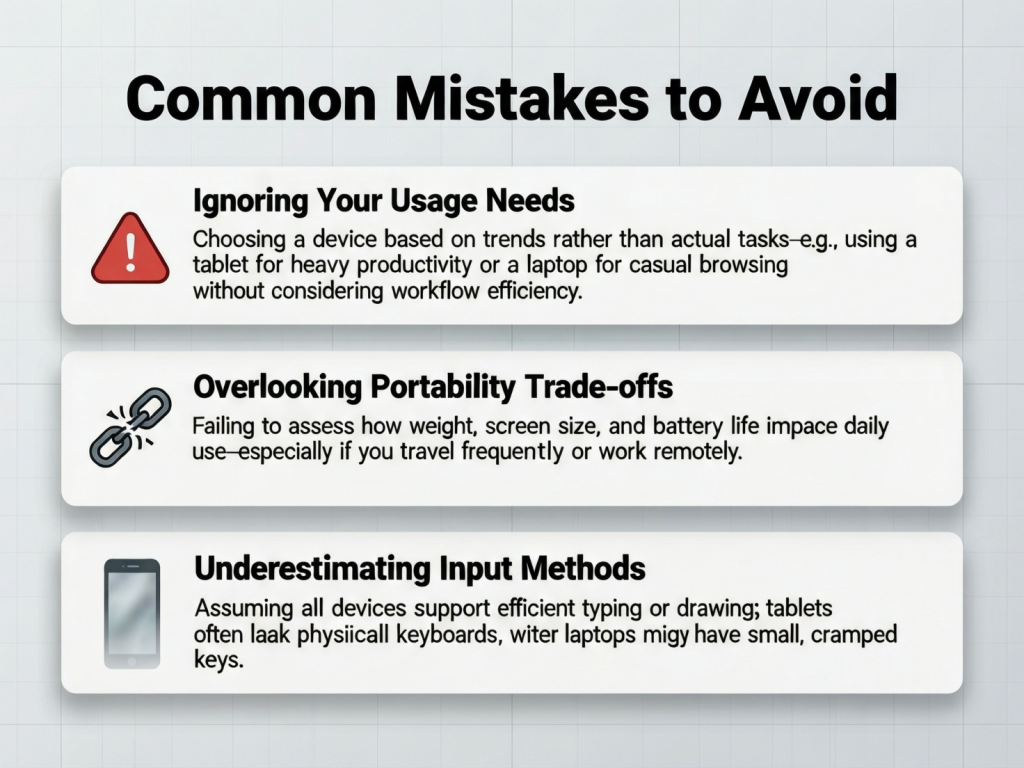
- Buying based on looks: Portability or design shouldn’t override performance needs.
- Ignoring software compatibility: Ensure apps you need are supported.
- Overestimating tablet power: Tablets are great, but they cannot fully replace laptops for demanding tasks.
- Neglecting accessories: Keyboards, stylus, or protective cases may be essential for tablets.
- Not considering future needs: Choose a device that will support your tasks for years.
FAQs
1. Can a tablet replace a laptop completely?
In most cases, no. Tablets are excellent for browsing, media, and light productivity. Laptops handle heavy software, multitasking, and long-term professional use better.
2. Which is better for students?
It depends on needs. Tablets are portable and good for reading or taking notes. Laptops are better for assignments, research, and software-heavy tasks.
3. Are laptops more expensive than tablets?
Generally, yes. High-performance laptops cost more due to advanced processors, larger storage, and more features. Tablets are cheaper but limited in performance.
4. How long do tablets and laptops last?
Laptops can last 4–6 years with proper care. Tablets last around 3–5 years depending on updates and usage.
5. Can I use a tablet for work?
Yes, if your work is light and mostly app-based. For professional tasks like coding, video editing, or multitasking, a laptop is preferable.
6. Which is easier to carry?
Tablets are lighter and more compact, making them easier to carry daily. Laptops are heavier but still portable.
7. Do tablets support external devices?
Yes, but connectivity is limited. You may need adapters to connect keyboards, printers, or storage devices.
8. Which device is better for gaming?
Laptops are superior for gaming due to better processors, graphics cards, and larger screens. Tablets support casual gaming but struggle with high-end games.
Expert Tips & Bonus Points
- Use hybrid devices: Some 2-in-1 laptops function as both tablets and laptops, offering flexibility.
- Check battery health: Always check battery performance before buying used laptops or tablets.
- Prioritize storage: Choose at least 256GB storage for laptops and 128GB for tablets for smooth usage.
- Consider software needs first: Your daily software should guide your choice more than design or price.
- Invest in accessories: Keyboard for tablets, cooling pad for laptops, and protective cases improve usability.
Conclusion
The Laptop vs Tablet comparison ultimately comes down to your needs and lifestyle. Laptops excel in performance, multitasking, and professional applications. Tablets win in portability, casual use, and ease of access. Understanding the differences ensures you select a device that enhances productivity and daily convenience.
If you need heavy software support, a laptop is the better choice. If you value lightness, long battery life, and casual usage, a tablet may suit you best. For many users, hybrid devices offer a balance of both worlds, combining laptop power with tablet portability.
By considering your tasks, software requirements, and usage patterns, you can confidently make a choice that aligns with your lifestyle. Ultimately, the right device will not only improve efficiency but also enhance your digital experience. Investing time in this Laptop vs Tablet comparison will save you money and ensure long-term satisfaction with your device.